
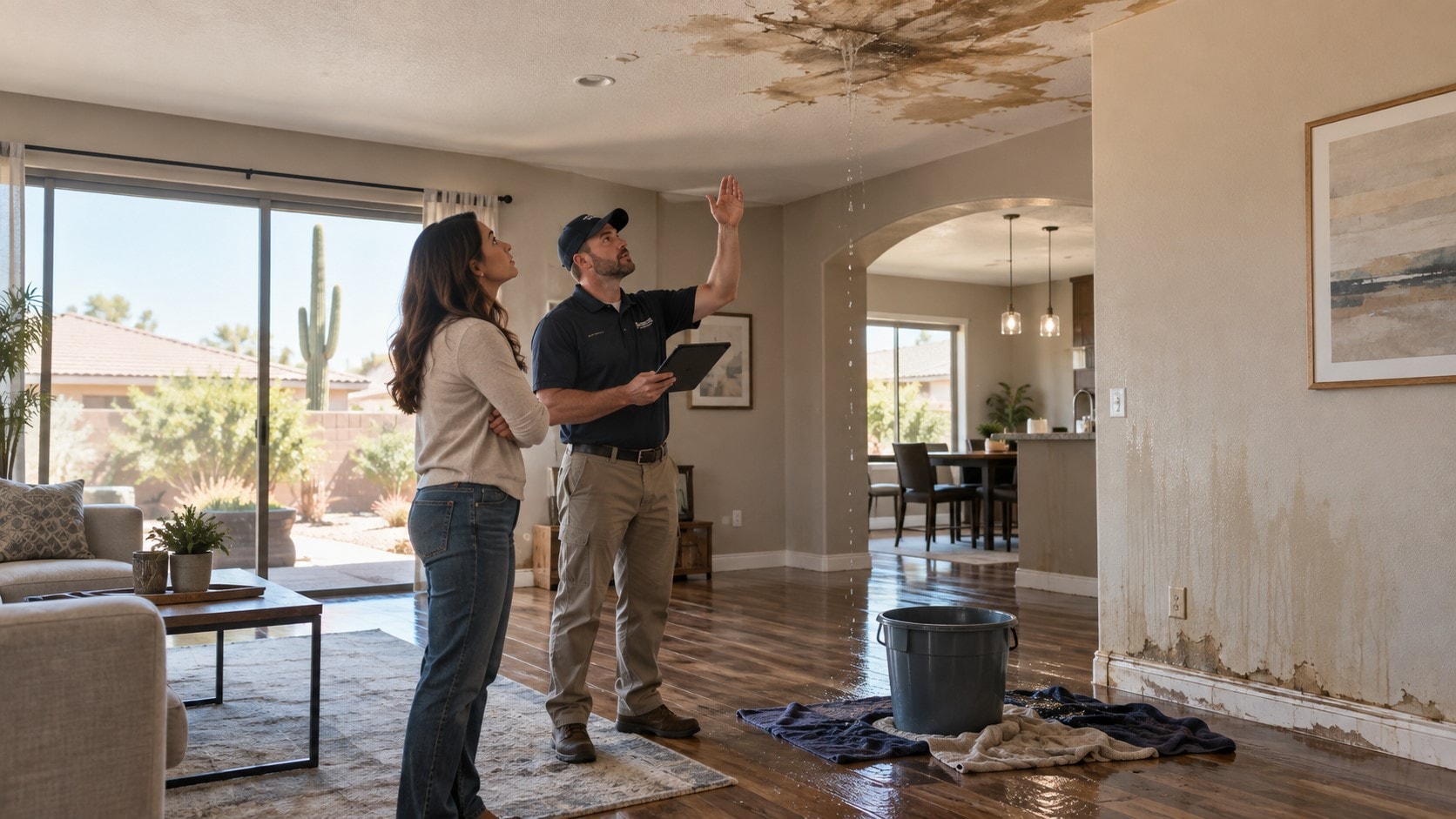
Discovering water damage in your home is unsettling enough on its own. Whether insurance covers the restoration depends entirely on what caused the loss. Standard homeowners policies protect against sudden disasters, not maintenance failures. The difference between a fully funded repair and an out-of-pocket expense usually comes down to how fast the damage happened and whether you can prove it was unforeseen.
When Insurance Covers Water Damage Restoration
Your policy generally responds to events that are sudden, accidental, and internal to the structure, as long as they come from a covered peril rather than deferred maintenance. Insurers look at the timeline of the damage as closely as they look at the source. You need to show the event was truly unexpected to get coverage for mitigation and reconstruction.
Sudden and Accidental Discharges
Most standard policies cover water damage that comes from an abrupt mechanical failure or plumbing accident inside your home. A supply line snapping behind a washing machine, or a water heater rupturing without warning, typically qualifies because these events happen instantly and without homeowner negligence. The discharge has to be unintentional and immediate. If an adjuster decides the leak had been running for weeks before anyone noticed, they may reclassify it as gradual damage and deny the claim.
Water damage and freezing account for nearly 30% of all homeowners insurance claims nationally, according to Insurance Information Institute data, making it one of the most frequent perils carriers handle.
Storm-Related Water Intrusion
Rain entering through wind-damaged roofs or broken windows during a storm is usually covered under standard dwelling protection. If a monsoon gust tears off shingles and drives rain into your attic, the water extraction and drywall repair that follow typically fall within policy limits, because the wind created the opening. That coverage applies specifically to water entering from above after structural damage. It does not apply to rising groundwater seeping through foundation cracks.
Common Exclusions in Water Damage Claims
Insurance is not a home warranty and it's not a maintenance fund for aging systems. Policies exclude damage from long-term neglect, wear and tear, or external flooding. Knowing these boundaries ahead of time keeps you from expecting coverage you won't get during an already stressful recovery.
Gradual Leaks and Maintenance Issues
Insurers routinely deny claims for slow leaks under sinks, seepage around shower pans, or corrosion inside walls that built up over months or years. Regular inspections would have caught these before they turned into a bigger failure, which is why carriers treat them as a homeowner's responsibility rather than a covered loss.
A Goodyear homeowner discovered a slab leak after noticing warped flooring. Because the leak was sudden and hidden, their insurer covered full mitigation and floor reconstruction. A similar warp caused by years of unsealed grout would likely be denied.
Check for signs of hidden water damage in walls or floors regularly to catch maintenance issues before they turn into uninsured losses.
Flood Damage vs. Water Damage
Standard homeowners insurance never covers flood damage, which the industry defines as rising water affecting two or more properties or acres of land. Even if monsoon runoff enters your garage from the street, or groundwater rises through your slab, you need separate flood insurance to cover those repairs. This exclusion catches a lot of Arizona homeowners off guard. They assume all water intrusion gets treated the same way, but carriers draw a hard line between water falling from above or bursting from within, and water rising from below.
The Water Damage Insurance Claim Process Explained
Filing a claim takes organized documentation and clear communication from the moment you find the damage. What you do in the first 48 hours sets the direction for the whole claim, and getting the right people involved early prevents scope disputes down the line.
Documenting Damage Immediately
Take extensive photos and video of the damage before removing any water or moving personal property. Get wide shots showing the extent of saturation, plus close-ups of specific damaged materials like baseboards, flooring transitions, and ceiling stains. This is your primary proof of loss. Once demolition starts, you can't recreate the original conditions for the adjuster's inspection.
Working With Adjusters and Contractors
Adjusters often approve claims faster when restoration contractors submit line-item estimates that mirror the Xactimate pricing standards carriers use. An experienced contractor speaks the adjuster's language, translating physical damage into the standardized codes and measurements that carrier software expects. That alignment cuts down on back-and-forth negotiation and helps keep your restoration scope matched to what the policy actually covers.
Skinner & Son has helped dozens of West Valley families work through water damage claims, managing both emergency drying and full reconstruction under one contract.
Does Insurance Pay for Pipe Burst Damage?
Sudden pipe bursts are among the most straightforward water damage claims to get approved. Coverage typically includes tearing out wet materials, drying the structure, and rebuilding affected areas to pre-loss condition.
The policy pays for the resulting damage, but it may not pay for the failed pipe itself if it corroded from age. Insurers treat the pipe as a maintenance item with a finite lifespan. They'll fund thousands of dollars in drywall and flooring replacement, but they might exclude the few hundred dollars it costs to replace the fitting that actually failed. Knowing this ahead of time helps you budget accurately even when your claim gets approved.
If you're currently dealing with an active leak, review what to do before calling a pro after a pipe burst to limit damage while you wait for help.
Filing a Water Damage Claim in Arizona
Filing a water damage claim in Arizona involves regional factors that generic national advice tends to skip over. Local construction methods and climate patterns create specific vulnerability points, and adjusters familiar with the West Valley expect to see those documented properly.
Local Considerations for West Valley Homes
Post-tension slab foundations, common throughout Goodyear and the greater Phoenix metro, present distinct challenges for leak detection and repair. Slab leaks here often show up as warm spots on tile floors or a sudden jump in the water bill rather than visible pooling, so pinpointing them takes specialized electronic detection equipment. A contractor who understands local building practices documents your claim the way these homes actually fail, not the way homes in other regions fail.
Monsoon Season Preparedness
Arizona's summer monsoon season brings microbursts that test roof integrity and drainage systems past normal wear. Insurers in the West Valley scrutinize claims filed right after major storms, trying to separate new storm damage from pre-existing deterioration that the weather made worse. Recent maintenance records and pre-storm photos strengthen your position when you're filing during peak claim volume in July and August.
Why Choose an Insurance-Approved Restoration Contractor
Working with a contractor experienced in insurance claims changes how efficiently your claim moves through the system. General handymen can do excellent work, but they often lack the estimating protocols and documentation standards carriers require for smooth approval.
Streamlined Claims and Reconstruction
Contractors experienced with insurance workflows provide detailed scopes that head off supplemental requests and delays. They document moisture readings daily, keep drying logs, and photograph each phase of demolition, building an audit trail that satisfies adjuster requirements. That thoroughness means you don't end up paying out-of-pocket for work the carrier missed the first time because the estimate lacked detail.
Local Expertise Matters
A local team knows which materials match existing finishes in West Valley subdivisions built during specific development eras. Matching discontinued tile or finding a compatible cabinet profile takes knowledge of local supplier inventories and regional construction trends that national franchises don't have. Choosing a licensed home remodeling contractor in Goodyear means your reconstruction meets both code requirements and matches the rest of the house.
Next Steps After Water Damage Strikes
Stop the water source immediately by shutting off the main valve or isolating the affected fixture. Document everything with photos before touching anything, then call a licensed restoration professional to start mitigation within 24 hours. Notify your insurer promptly, but wait to sign any authorization forms until you understand what your policy actually obligates and excludes.
Requesting a free remodeling consultation in Goodyear gives you clarity on both coverage questions and reconstruction options without commitment. Skinner & Son handles emergency mitigation and full rebuilds under one roof, closing the gap between drying out your home and getting it back to livable condition.