Water damage creates immediate stress, but the secondary threat of biological contamination often causes more lasting harm than the flood itself. Mold after water damage isn't just a cleaning issue. It's a structural and environmental hazard that grows in the gap between "looks dry" and "is actually dry." For homeowners in Goodyear and the West Valley, understanding the mold growth timeline, and the real difference between drying a space and remediating it, is the first step toward protecting your home. Waiting to see if a musty smell fades, or hoping a box fan will handle a saturated subfloor, only widens the scope of repairs and the cost that comes with them.
The Critical 24-48 Hour Window for Mold Growth After Flooding
Mold colonies can establish within 24 to 48 hours of sustained moisture exposure on porous building materials. Speed is the single biggest factor in limiting damage, because the window for effective intervention closes long before you'd notice discoloration on baseboards or drywall.
Why mold spores activate so quickly in Arizona homes
In Arizona, evaporative coolers and monsoon-season humidity spikes frequently create hidden saturation behind stucco and drywall. Our desert reputation suggests otherwise, but the air inside a wall cavity or under a floor can stay intensely humid even when the outdoor air is bone dry. Evaporative cooler leaks are particularly bad news: they feed continuous moisture directly into attics or interior walls, which is exactly what dormant spores are waiting for. You can't count on desert heat to dry out an enclosed wall cavity before biological activity starts.
Signs that mitigation is already overdue
Visible growth is a late-stage indicator. By the time you see spots, the colony has likely been active for days or weeks. A persistent earthy odor, peeling paint, or warping laminate flooring means moisture has gone deeper than surface cleaning can reach. If you've already tried to dry the area yourself, without industrial dehumidification and moisture verification, assume contamination is still there. Catching these signs of hidden water damage in walls or floors early is what keeps a manageable repair from turning into a demolition project.
Mold Remediation vs Water Damage Restoration: Understanding the Difference
Homeowners tend to use these terms interchangeably, but they cover very different scopes of work, with different technical requirements and safety protocols. Confuse them and you can end up with water removed but biological hazards still embedded in the structure.
When water extraction is enough
Standard restoration removes standing water, dries structural materials, and repairs the physical damage the leak caused. If clean water from a supply line gets addressed right away, and drying equipment brings moisture down to acceptable levels inside that first 48 hours, remediation may not be necessary. The goal is returning the building to its pre-loss condition through mechanical drying and reconstruction.
When specialized remediation protocols are required
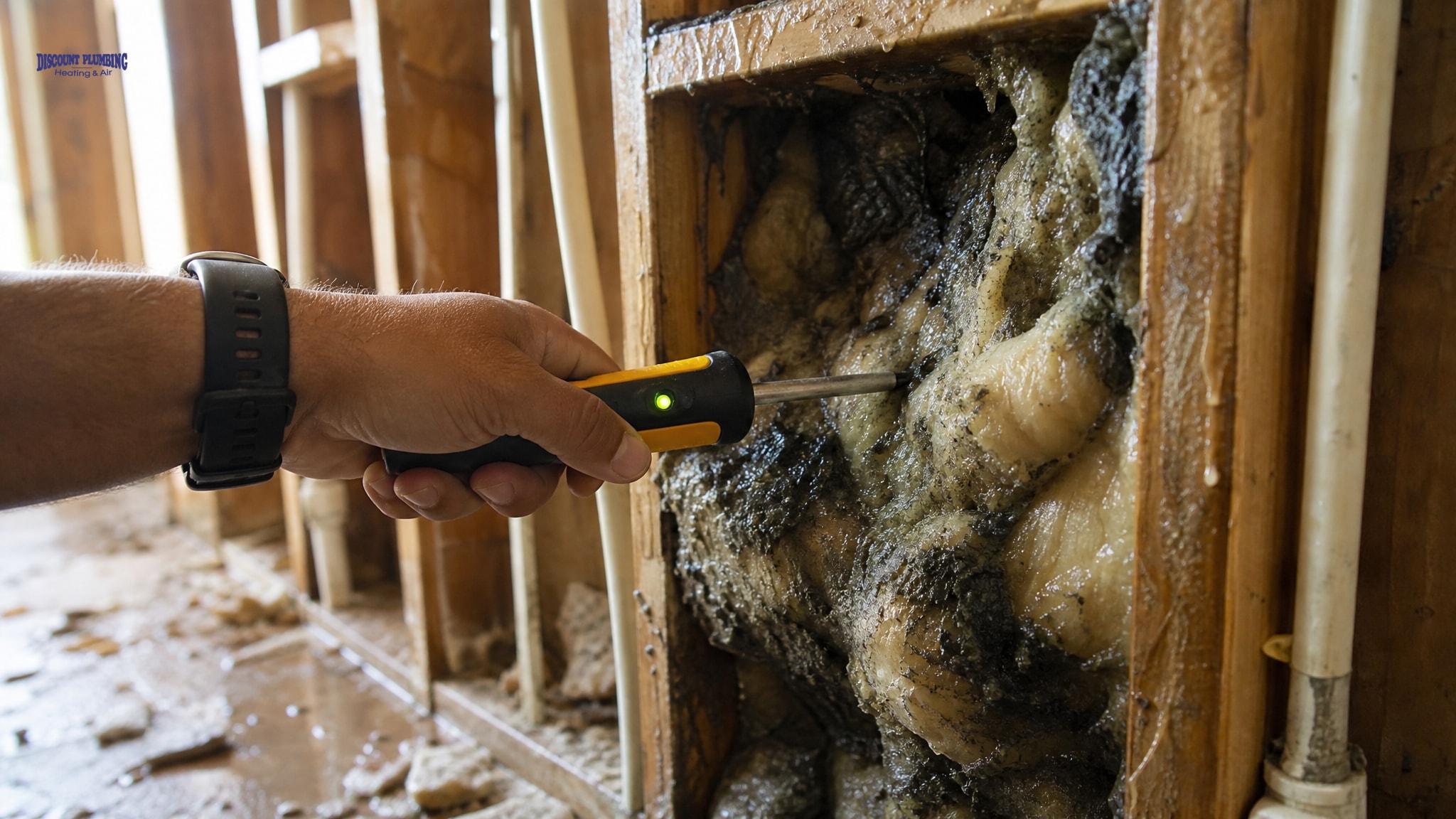
Remediation becomes mandatory once microbial growth has colonized porous materials, or when grey or black water has introduced pathogens that standard drying can't touch. Surface cleaning doesn't reach mycelium embedded in wood framing. Proper remediation means removing or encapsulating the contaminated substrate, using containment barriers, negative air pressure, and HEPA filtration to keep the removal from spreading contamination further. Skinner & Son handles water mitigation and reconstruction under one licensed contractor, so there's no handoff between the drying crew and the rebuild crew for mold to slip through.
Identifying Black Mold and Other Toxic Varieties After Water Damage
Color is never a reliable indicator of toxicity. Trying to identify a hazardous species by eye just exposes you to risk without giving you any real answer. Stachybotrys chartarum, commonly called black mold, gets most of the attention because of its mycotoxin production, but species like Aspergillus or Penicillium can cause serious respiratory problems while looking white, green, or gray.
Professional verification, through air quality testing and surface sampling, is the only way to know what you're actually dealing with. Amateur test kits often give false negatives or can't tell dormant spores from an active colony, which leaves you with false confidence in an unsafe space. Treat any unknown fungal growth as potentially hazardous until a lab says otherwise. That's why we don't recommend DIY inspection of suspected toxic varieties.
How to Prevent Mold After a Water Leak During Reconstruction
Reconstruction is a chance to build resilience into your home, but only if the moisture problem is genuinely solved before new materials go in. Rushing to close up walls to hit a deadline is the most common cause of mold coming back in renovated spaces.
Verifying moisture levels before closing walls
Contractors should use penetrating moisture meters and thermal imaging to confirm that framing lumber, subflooring, and concrete slabs are back to equilibrium moisture content before insulation or drywall goes back up. This step isn't optional: trapped moisture will migrate into new finishes and start the growth cycle over again. Expect your contractor to document these readings as part of the project record, as proof the substrate was actually dry when the walls closed.
Selecting mold-resistant materials for West Valley renovations
Material choice matters a lot in rooms prone to leaks or high humidity, like bathrooms and kitchens. Cement board, paperless drywall, and closed-cell spray foam insulation resist moisture far better than traditional organic substrates do. None of this makes a home immune to future leaks, but it buys time and cuts the odds of serious biological damage if water gets in again. Bring these options up during planning so your renovation handles both looks and long-term durability.
Hidden Moisture Risks Behind Walls and Under Floors
Water follows gravity and capillary action into cavities and sub-surfaces that surface drying equipment can't reach. Cabinet toe kicks, the subfloor beneath tile, and the space behind vinyl wallpaper are common places where moisture sits undetected for months after the original event.
A lingering odor or slight warping in finish materials often points to this trapped moisture, even when the surface feels completely dry. A borescope inspection, or selective demolition, may be the only way to confirm what's happening in these concealed spaces. Small leaks turn into major structural failures mostly because someone decided the visible damage looked minor enough to ignore.
Insurance Coverage Considerations for Mold and Water Damage
Policy language typically draws a sharp line between sudden, accidental water damage and long-term neglect, and that line decides what actually gets reimbursed. Most standard homeowners policies cover the source of the leak and the initial drying, but may exclude mold remediation unless it resulted directly from a covered peril and got addressed promptly.
Know your policy's endorsements and exclusions before you file a claim, so there are no surprises during adjustment. Review your insurance coverage for water damage restoration documentation, or talk to your agent about limits on fungal remediation specifically. Documentation of timely mitigation strengthens your claim, since insurers often deny cases where a delayed response let mold take hold.
Scheduling Emergency Restoration Services in Goodyear and the West Valley
No article replaces an on-site assessment by licensed technicians who can measure what you can't see, and this one doesn't try to. If you suspect recent water intrusion, or you're catching musty odors in your Goodyear or West Valley home, waiting only narrows your options and adds to the damage.
Skinner & Son provides local emergency response along with full reconstruction, so you're not stuck coordinating between separate mitigation and rebuild companies. Taking immediate steps after a pipe burst buys time, but professional intervention is what actually secures the outcome. Contact us to schedule an urgent assessment, or request a free remodeling consultation in Goodyear if you're planning a renovation and want your home protected against future moisture risk.