When water invades your West Valley home, the contractor you hire in the first forty-eight hours decides whether you face a straightforward repair or a months-long remediation mess. Knowing what to look for in a water damage restoration company separates professionals who protect your property from opportunists who exploit your stress. This guide covers the credentials, operational standards, and local knowledge that matter when you're hiring for homes in Avondale, Glendale, Buckeye, and surrounding communities, whether you're dealing with a planned renovation or a sudden emergency.
Why IICRC Certification Matters for Arizona Homes
Industry experts recommend checking for IICRC certification first when you're choosing a restoration provider, since it confirms the company follows current cleaning and restoration standards (Convoy of Hope). The credential means technicians have passed testing on water extraction, structural drying, and mold remediation protocols for residential construction. That matters because untrained crews often miss moisture trapped behind stucco or under tile. The water sits there, and secondary damage follows, damage your insurance may not cover.
Understanding Industry Standards
The Institute of Inspection, Cleaning and Restoration Certification sets the benchmark for water damage restoration and mold remediation work across the United States. The standards cover everything from personal protective equipment to the formulas used to calculate how many air movers a room needs. A company working without this training is guessing at drying times and antimicrobial applications, and that guesswork can leave your home unsafe.
Verifying Active Credentials
Training expires and standards change, so an active certificate matters more than a logo on a truck. Ask to see current certificates and check them against the IICRC database before you sign anything. A legitimate contractor hands over this proof right away. They know your confidence should rest on something you can verify, not on what their ad says.
Evaluating Emergency Response Times and Availability
Mold can start growing in as little as 24 hours under the right conditions, which means immediate drying or antimicrobial treatment isn't optional (Restore Masters). Rapid response is a biological necessity here, not a nice-to-have. Look for companies that guarantee on-site arrival within hours, not days. Every hour of delay compounds structural damage and health risk.
The Critical 24-Hour Window
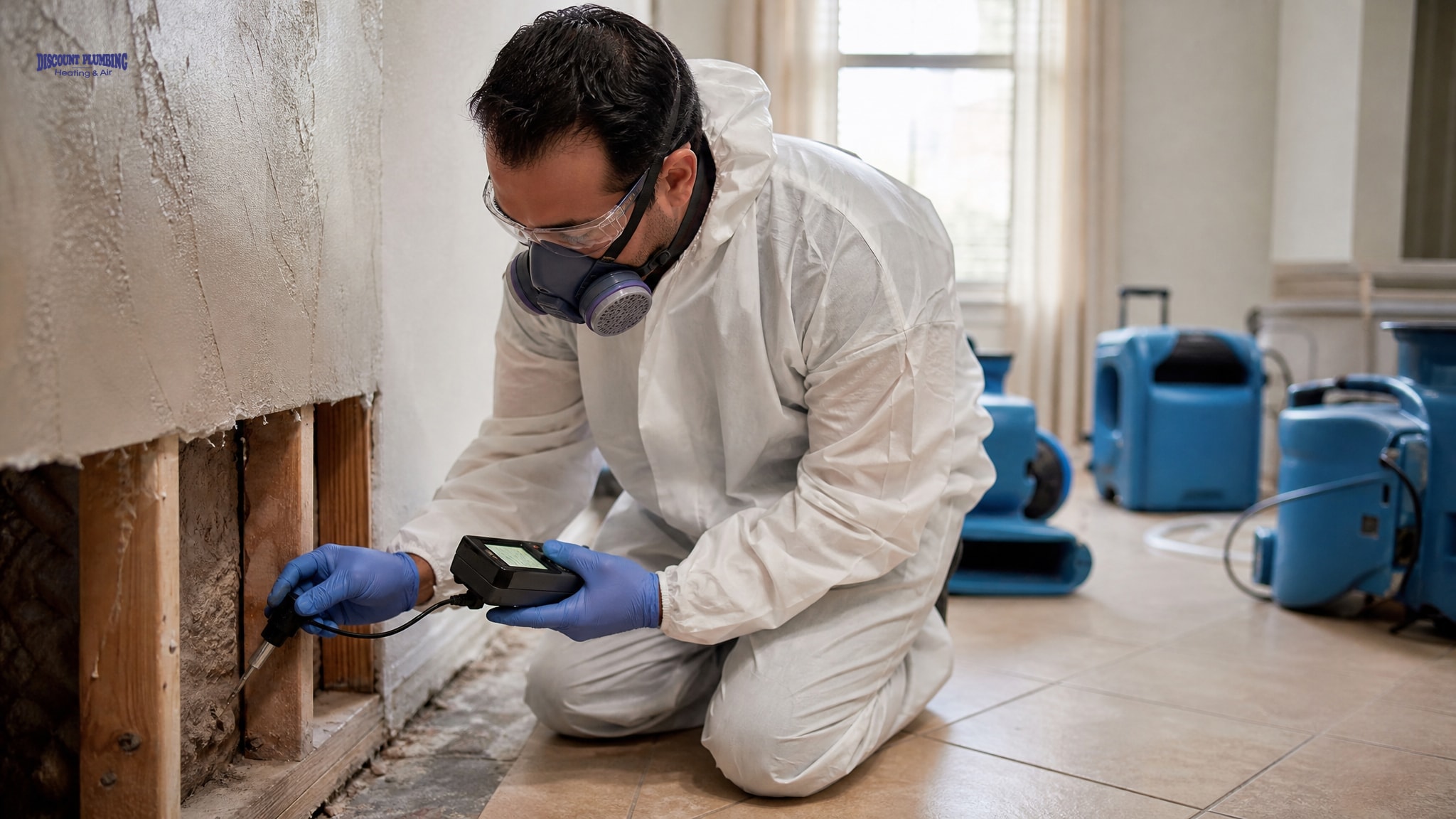
Water moves fast through drywall, insulation, and subflooring, leaving hidden pockets of saturation that a surface inspection misses. Professional teams bring in industrial extraction equipment and moisture meters within this window to stop the spread before it reaches rooms that are still dry. Wait too long, and you're looking at demolition that could have been avoided, plus more cost and more time out of your house.
Local Dispatch vs. National Call Centers
National franchises often route emergency calls to out-of-state dispatchers who don't know West Valley infrastructure or monsoon patterns. Local dispatch teams know which neighborhoods in Goodyear or Litchfield Park run older plumbing prone to specific failures, which speeds up diagnosis. When you call for water damage restoration services in Avondale, you want a dispatcher who knows local building codes and can send crews already in the area instead of waiting on regional mobilization.
How Restoration Companies Work With Insurance Adjusters
Navigating insurance coverage for water damage means producing documentation that satisfies your adjuster while still protecting your right to full compensation. A good contractor speaks the language of claims software and backs up the invoice with evidence that supports your policy's terms. You shouldn't have to translate between your contractor's paperwork and your insurer's estimate format yourself.
Documentation Requirements for Claims
Adjusters want line-item estimates that match industry-standard pricing databases like Xactimate, or they'll delay or deny the claim. Your contractor needs to hand over detailed moisture logs, photos showing the source of the damage, and itemized labor breakdowns that justify every charge. Missing documentation gives insurers an excuse to cut payouts, and then you're covering costs your policy was supposed to handle.
Direct Billing and Scope Agreements
Many restoration companies offer direct billing, so you're not covering the cost upfront during an already stressful stretch. These arrangements usually come with a written scope of work that matches your adjuster's approved estimate before any demolition starts. Ask whether your contractor handles both mitigation coverage and reconstruction coverage. Some policies split these into separate phases, each needing its own approval.
Essential Questions to Ask a Water Damage Contractor
The questions worth asking reveal operational maturity, not a rehearsed sales pitch. You're trying to find out whether this crew has handled a situation like yours and knows the common pitfalls well enough to avoid them. Write these down before the consultation so you can judge the answers against something concrete.
Check that the company holds an active Arizona ROC license with no unresolved complaints, plus general liability and workers' compensation insurance. Ask for proof of bonding that covers your project's size. An unbonded contractor leaves you exposed to lien risk if subcontractors don't get paid. If your home was built before 1980, ask about asbestos testing specifically: properties built in or before the 1970s are more likely to contain asbestos-containing materials that need special handling during demolition (Restore Masters). And get written warranty terms covering both workmanship and materials, including any exclusions for pre-existing conditions or maintenance you're responsible for.
Red Flags When Choosing a Restoration Company
You'll often spot the warning signs on the first phone call or site visit, if you know what to listen for. Trust your gut. High-pressure situations draw in operators who care more about volume than quality. Walking away from a bad fit costs less than paying twice to fix botched mitigation.
High-Pressure Tactics and Vague Contracts
A legitimate contractor never demands full payment upfront or refuses to put a scope of work in writing before starting demolition. Watch out for anyone who claims they can "get you more money" from your insurer, or who suggests inflating damage descriptions to pad the claim. That's insurance fraud, and it can get your claim denied, your policy cancelled, or worse.
Lack of Local References or Physical Address
Storm chasers and transient operators usually can't produce real local references in Avondale, Goodyear, or other West Valley communities. Check that the company has a physical office in Arizona and can connect you with recent clients in your city. If their website lists only a P.O. box or an out-of-state headquarters, that's a real warning sign. They may vanish the moment payment clears.
Equipment Standards and Drying Protocols
Professional water damage restoration runs on industrial-grade equipment that keeps working until moisture readings confirm the structure is actually dry. Consumer-grade fans and dehumidifiers can't hit the low humidity levels needed to stop microbial growth inside wall cavities. Your contractor should be able to explain the equipment plan in plain terms, tying each tool to a result you can measure.
Low Grain Refrigerant (LGR) dehumidifiers pull moisture more efficiently than standard units, which matters in Arizona's climate, where ambient humidity swings a lot. Thermal imaging cameras pick up temperature differences that point to hidden saturation behind finishes, so demolition targets the actual problem instead of guessing. Proper drying logs, with daily moisture readings, matter both for health and safety and for insurance reimbursement. Ask for copies as the work goes.
From Mitigation to Reconstruction: Keeping the Repair Seamless
Hiring separate companies for mitigation and reconstruction opens up gaps where accountability disappears and timelines stretch out. A single contractor handling water extraction, structural drying, and the final rebuild under one roof means no finger-pointing when something comes up. That continuity matters most during the gap between emergency response and permanent restoration, when secondary damage is most likely.
An integrated team stays in consistent contact with your insurance adjuster through both phases, which heads off scope disputes before they stall the job. They also keep the evidence collected during mitigation for the reconstruction claim, so your rebuild reflects what actually happened rather than guesswork. For homeowners dealing with storm damage repair in Goodyear or similar events, that continuity means getting back to normal faster with fewer surprises.
Catching signs of hidden water damage early lets your contractor get ahead of problems before they turn into structural failures. Once mitigation wraps up, follow the guidance on preventing mold after water removal to keep the dry environment your restoration team worked to create. Skinner & Son serves West Valley homeowners with local expertise spanning both emergency response and reconstruction, so you've got one team handling your home from the first call to the last repair.
Frequently Asked Questions
How do I choose a water damage restoration company?
Verify active IICRC certification, confirm local dispatch capabilities rather than national call centers, and request proof of Arizona ROC licensing with adequate bonding. Check for verifiable references within your specific West Valley community and ensure they provide written scopes of work before beginning any demolition. Avoid companies demanding full upfront payment or lacking a physical Arizona address.
What should I not say to an insurance adjuster about water damage?
Never speculate about the cause or extent of damage before professional assessment, as casual comments can be used to limit coverage. Do not admit fault, suggest negligence, or agree to recorded statements without consulting your restoration contractor first. Let your licensed professional document findings objectively and communicate technical details on your behalf to prevent misinterpretation.
What questions should I ask a restoration company?
Ask for proof of active IICRC certification, current Arizona ROC license, and workers' compensation insurance. Inquire about asbestos testing protocols for older homes, request written warranty terms, and clarify whether they handle both mitigation and reconstruction. Demand references from recent projects in your specific city and ask how they coordinate directly with insurance adjusters.
What does water damage restoration include?
Professional restoration encompasses emergency water extraction, structural drying using industrial dehumidifiers and air movers, and antimicrobial treatment to prevent mold growth. It includes moisture monitoring with thermal imaging, documentation for insurance claims, and demolition of unsalvageable materials. Many companies also handle reconstruction services to return your home to pre-loss condition, though some specialize only in mitigation.