
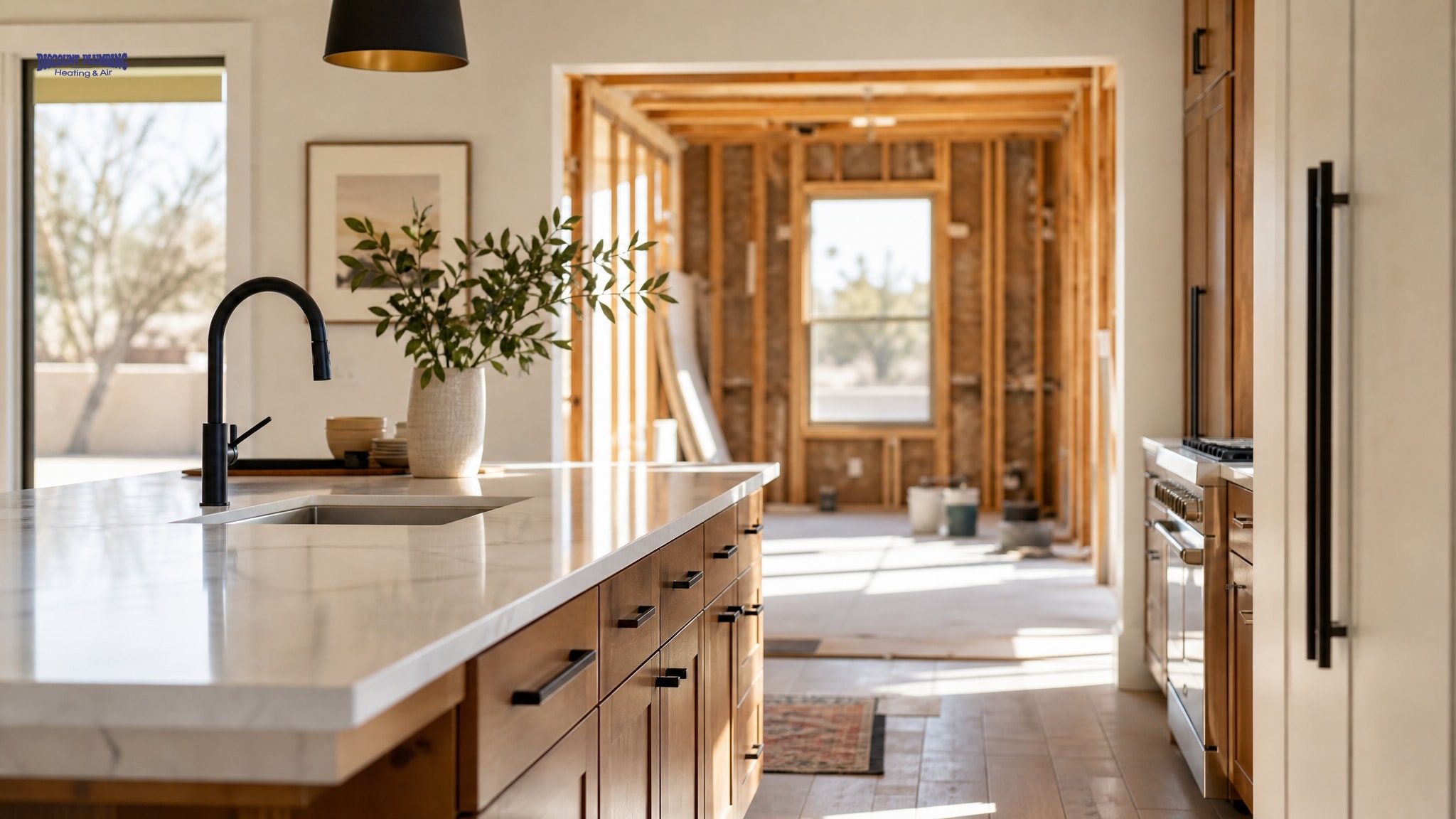
Deciding between a whole home renovation and remodeling one room usually comes down to more than personal taste. Your budget matters, so does how much disruption you can live with, and so does whether your West Valley property has problems that need fixing before anyone talks about cosmetics.
Skinner & Son works with homeowners across Avondale, Goodyear, Glendale, and the broader Phoenix metro who face this exact decision, whether they're planning an upgrade or dealing with storm damage that showed up overnight. Knowing the practical differences between these two approaches helps you avoid costly missteps and keeps your investment matched to how you actually live.
Defining the Scope: Whole Home Renovation vs Single Room Remodel
A whole home renovation usually means structural changes, system upgrades, and coordinated design work across multiple areas of your house. A single room remodel updates one space without touching the home's layout or infrastructure. That distinction matters because comprehensive renovations need permits, engineering assessments, and longer timelines, and all of that affects your daily life far more than an isolated project does.
Get clear on this difference before you request estimates. Contractors price these two scopes differently and schedule them around different constraints. A full-home project might mean moving load-bearing walls, replacing electrical panels, or reconfiguring plumbing stacks that serve multiple rooms. A kitchen or bathroom update usually stays within the existing footprint and utility connections.
Whole home renovations also need one design vision that carries through every space. You're deciding on flooring transitions, lighting consistency, and material palettes before demolition even starts. Single room projects give you more room to maneuver, since you can focus entirely on one space's function and look without worrying about how it ties into the rooms next door.
How to Prioritize Home Renovations Based on Urgency and ROI
West Valley homeowners frequently discover hidden water damage behind walls, and it has to take precedence over planned kitchen upgrades to prevent mold and structural decay. If your home has had leaks, flooding, or storm damage, restoration work becomes the mandatory first step regardless of your aesthetic goals. Building new finishes over a compromised substrate wastes money and creates health hazards.
Identifying hidden water damage before renovating protects your investment by surfacing problems now instead of mid-project, where they inflate costs unexpectedly. Once your home's envelope and systems are sound, you can weigh the remaining projects on return on investment and daily livability instead of emergency triage.
Kitchen and bathroom renovations consistently deliver the highest return on investment among West Valley home improvement projects, provided they're built with quality materials and licensed professionals. These are the rooms you use every day, and they shape how a buyer sees your whole house. That makes them the logical priority once urgent repairs are done and before you touch lower-impact areas like bedrooms or hallways.
Local conditions should shape your sequence too. Phoenix-area heat and sun accelerate wear on exterior components and roofing, the things protecting everything inside. Fix stucco cracks, window seals, or irrigation damage before interior updates, or you risk water intrusion undoing the renovation work you just paid for.
Budgeting for Home Improvement Projects: Lump Sum vs Phased Spending
Funding a full remodel at once takes real capital, but it often lowers the overall cost per square foot through bulk material purchasing and a crew that never has to stop and restart. You skip repeated mobilization fees, permit renewals, and the inflation risk that comes with stretching a project across multiple years in Arizona's active construction market.
Phased spending spreads the financial pressure across months or years. You can pay cash for each stage or line up smaller loans as needed. This suits families who can't access lump-sum financing, or who'd rather keep emergency savings intact while improving the house bit by bit.
Budgeting this way takes disciplined planning so scope doesn't creep between stages. Each phase needs to function on its own, so you're not stuck with an unusable kitchen or a half-finished bathroom if the funding pauses.
Even with a multi-year plan, get a professional estimate upfront. Contractors need to see your ultimate vision so the early phases don't create conflicts or redundant work down the line.
The Case for Full Home Remodel Planning
Tackling multiple areas at once gives you better design cohesion, because materials, fixtures, and architectural details get chosen as one integrated plan instead of pieced together over time. You avoid the visual disconnect that shows up when a tile lot changes between batches or a cabinet line gets discontinued mid-project.
Full home remodel planning also unlocks efficiencies a phased approach can't match: renting a dumpster once, bundling inspector visits, negotiating volume discounts with suppliers. Those savings partly offset the higher upfront cost and shorten the total time your home is under construction.
Living elsewhere during a comprehensive renovation means you skip the dust barriers and the temporary kitchen entirely. Families with young kids, remote workers, or elderly household members often find the extra rental cost worth it compared to months of disrupted routines.
Coordination gets simpler, too, when one contractor manages all the trades in sequence instead of you juggling overlapping schedules across separate contracts. Skinner & Son provides integrated remodeling and restoration services under one contract, which closes the coordination gaps that often trip up homeowners hiring separate specialists for emergency repairs and planned renovations.
Benefits When You Renovate One Room at a Time
Staying in your home during construction is realistic when the work is confined to one area. Your routine stays mostly intact, there's no relocation expense, and you keep access to most of the house, so hosting family, working remotely, or caring for pets doesn't turn into a logistical headache.
Local contractors see this often: phased remodeling lets families test out a crew's craftsmanship and communication on a smaller bathroom project before committing to a whole-home transformation. That trial run builds confidence and shows whether the team meets your standards for cleanliness, timeliness, and problem-solving.
Renovating one room at a time is the more cost-effective path when your existing systems are sound and your design goals are modest. If you like your home's layout and just need updated finishes in a couple of spots, paying for structural reconfiguration or whole-house design services is money you don't need to spend.
This approach also bends with your family's changing needs. A bathroom you update this year might teach you something about material durability or storage that changes your plans for the kitchen next year.
Phased Home Remodel Strategies for Kitchens and Bathrooms
Breaking a complex kitchen or bathroom renovation into stages keeps the space functional while you work toward the final result. Start with the rough-in work, plumbing and electrical upgrades that need wall access, then close up the surfaces before installing cabinets and fixtures in later phases.
What to expect during West Valley kitchen remodels covers which tasks can pause safely and which have to run back-to-back to avoid code violations or warranty issues. A temporary sink or a portable cooking setup bridges the gap between demolition and final installation, so your household stays operational the whole time.
Bathroom phasing usually puts waterproofing and ventilation ahead of cosmetic choices, since those invisible elements decide how long the room lasts, more than any tile pattern or vanity style will. Running the shower pan test and the moisture barrier inspection early saves you from an expensive tear-out if a leak shows up after the finishes go in.
Material staging matters, too, when a one-room-at-a-time renovation stretches across multiple seasons. Store tile, fixtures, and hardware in climate-controlled conditions, or they'll warp or degrade between the day you buy them and the day they go in.
Choosing the Right Path Before Requesting a Consultation
Your decision between a whole home renovation and remodeling one room should follow your property's current condition, your budget, and how much construction disruption you can tolerate. Homes with deferred maintenance or recent water damage usually need restoration-first sequencing. Well-maintained properties give you more room to choose your scope.
Selecting a reliable Arizona remodeling contractor early in your planning gives you site-specific insight that online research can't. A local team that's been doing this for years recognizes common West Valley construction methods, soil conditions, and permitting requirements, the things that actually shape your timeline and budget.
Before your first meeting, write down your priorities, pull together some inspiration photos, and note any known issues like past leaks or settling cracks. That preparation helps a contractor tell you honestly whether your goals fit a single-phase project or need to be broken into several.
Prioritizing home renovations gets a lot clearer once you have input tailored to your address and your circumstances, not general advice. Schedule a free remodeling consultation in Goodyear to talk through your options with a team that handles both planned upgrades and emergency restoration across the West Valley.
Frequently Asked Questions
How long does a whole home renovation take compared to remodeling one room?
Whole home renovations typically span four to eight months depending on scope, permitting, and material lead times, while single room remodels often complete in six to twelve weeks. Comprehensive projects include design development, structural work, and multiple inspection cycles that extend timelines beyond what isolated updates require. Your contractor can provide a more precise schedule after assessing your home's specific conditions and your selected finishes.
Should I fix water damage before starting a kitchen or bathroom remodel?
Yes, always address water damage and structural issues before beginning cosmetic renovations to prevent mold growth and wasted investment. Building new finishes over compromised framing or subflooring leads to premature failure and potential health hazards that cost more to remediate later. A qualified restoration contractor can assess moisture levels and recommend necessary repairs before your remodel begins.
Is it cheaper to remodel my entire home at once or room by room?
Whole home renovations often achieve lower cost per square foot through bulk purchasing and continuous scheduling, but require larger upfront capital. Phased remodeling spreads expenses over time and avoids financing costs, though repeated mobilization and material price inflation may increase total spending. Your best option depends on available funds, financing terms, and how quickly you need completed results.
Can I live in my house during a whole home renovation?
Living onsite during comprehensive renovations is possible but significantly disrupts daily routines due to dust, noise, and loss of functional spaces. Many West Valley families find temporary relocation worthwhile for projects exceeding three months to preserve sanity and protect belongings from construction debris. Discuss occupancy options with your contractor during planning to understand safety requirements and realistic livability conditions.