
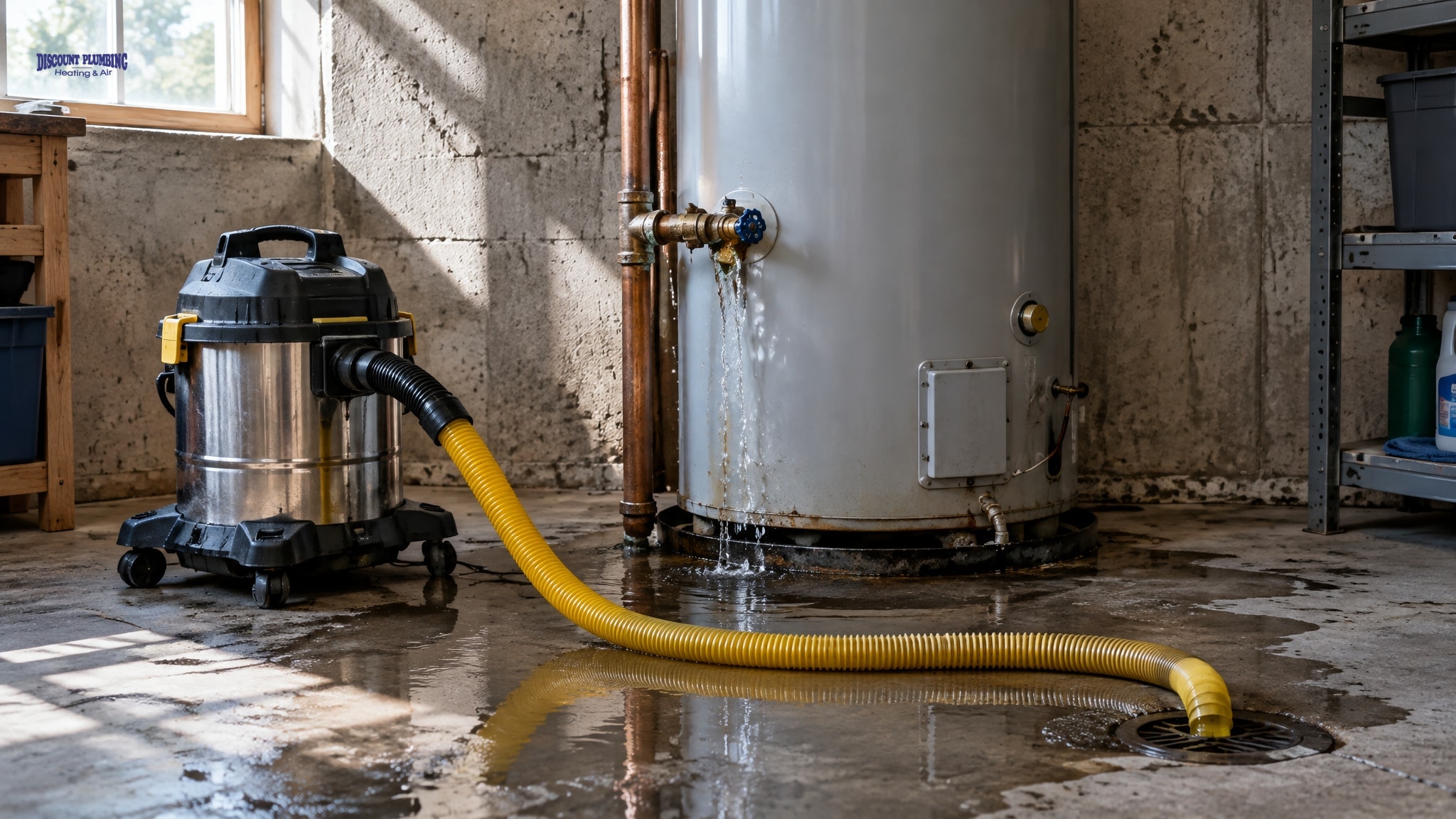
A pipe lets go or a water heater fails, and within minutes you're on the phone with whoever picks up first. That's the worst moment to choose a contractor, and it's the moment most people do.
Keep this page open next to your phone. It's a script of ten questions, with the answer to listen for after each one, and the sections below it explain what a good answer looks like in more detail. For the wider selection criteria, there's also the broader guide on what to look for in a water damage restoration company.
Questions to Ask a Water Damage Restoration Contractor on the First Call
Emergency contractor vetting has to fit inside a phone call, because standing water won't wait for a second round of research. When you're hiring a water damage restoration company, these ten questions work on any contractor, including us, and a solid company answers each one without dodging.
- "What's your arrival window if I book now?" Listen for a specific window you can plan around. "As soon as we can" isn't an answer.
- "Do you cover nights and weekends, and is it the same crew?" Listen for a clear yes and a real process, such as a live dispatcher or a fast call-back. Pipes don't fail on office hours.
- "Is the crew dispatched from the West Valley?" Listen for a straight answer that names where the trucks start from. A crew coming from Avondale or Goodyear reaches a home in Buckeye or Litchfield Park faster than one coming from across the metro.
- "Are you licensed in Arizona, and what's the license number?" Listen for a number given right away, under the exact company name that will be on your contract.
- "Can you email current liability and workers' compensation certificates?" Listen for "yes, today." Hesitation here tells you something.
- "Who will be in my home, and what IICRC credentials do they hold?" Listen for a lead technician's name and credentials like WRT or ASD.
- "What moisture documentation do I get?" Listen for a written moisture map, readings tracked through the drying period, and a stated dry standard.
- "Who writes the estimate and who talks to my adjuster?" Listen for a named person and a plan for sharing your readings with the claim file.
- "Do you rebuild the walls and floors yourselves, or subcontract it?" Listen for a plain answer, plus who your single point of contact is.
- "Will the scope of work be in writing before you start?" Listen for "yes," with line items, exclusions and change orders.
You don't need perfect answers to all ten while water is still spreading. You do need straight ones, and any company that bristles at being asked is telling you how it will act once it's in your house.
If you're already mid-emergency, emergency water damage restoration in the West Valley is the quickest way to reach us.
Licensing and Insurance to Check Before Hiring
Licensing and insurance are the two checks you can finish in minutes, and they protect you if something goes wrong on the job. Both are paperwork, so a legitimate company already has them on hand.
Is Your Restoration Company Licensed in Arizona?
You can answer "is my restoration contractor licensed in Arizona?" yourself, without taking anyone's word for it. The Arizona Registrar of Contractors runs a public license lookup where you can search by company name or license number before you sign anything.
Look for three things:
- The license is active, not suspended, expired or lapsed.
- The name on the license matches the company named on your contract, word for word.
- The classification covers the type of work being done, not just a nearby trade.
A license check confirms standing, not craftsmanship, so use it to rule companies out rather than to pick one. If a remodel is also on your list, how to choose a home remodeling contractor in Arizona runs through the same check for planned projects.
Can You Show Proof of Liability and Workers' Compensation Insurance?
Ask for current general liability and workers' compensation certificates in writing, by email or text, before the crew steps inside. A verbal "we're fully covered" protects nobody. If a worker is hurt in your home or a crew member damages a room that wasn't wet, those certificates decide who pays.
Then ask whether any subcontractors carry their own coverage, or whether they're covered under the company's policy. Get that answer in writing too.
Who Will Actually Be Working in Your Home?
The company that answers your call and the people who show up aren't always the same, so ask about the second group directly. Request the lead technician's name, and ask whether the crew members are employees or subcontractors.
Then ask about training. Restoration technicians often hold credentials from the IICRC (Institute of Inspection, Cleaning and Restoration Certification), such as Water Damage Restoration Technician (WRT) and Applied Structural Drying (ASD), so asking which ones the people on your job hold is a quick way to gauge their training.
A credential shows someone has been trained, not that they'll do the job well, so treat it as one signal among several. And if a company can't tell you who is coming, you can't tell who you're letting in.
Moisture Mapping and Documentation You Should Receive
Professional water damage restoration is commonly organized around the IICRC S500 standard, which frames the work as assessing the loss, documenting conditions and monitoring drying until materials reach a dry standard. Moisture mapping documentation is how you see that process, rather than trusting it.
It matters more in the West Valley than you might expect. Many homes here sit on concrete slabs with tile floors, so water can travel beneath the flooring and into wall cavities where a quick visual check misses it. A moisture map shows where the wet zone actually ends.
How Do You Measure and Map Moisture?
A documented crew uses instruments, not guesses. Expect pin and pinless moisture meters for walls and floors, thermal imaging to spot wet areas behind surfaces, and psychrometric readings of air temperature and humidity to track the drying environment.
Ask for a written moisture map of the affected rooms and materials, with readings marked where they were taken. You should leave the first visit knowing which rooms are wet, which materials are involved, and what the starting numbers were.
How Do You Know When Materials Are Dry?
The answer should be a number, not a feeling. A crew should compare readings in the affected materials against unaffected reference areas in your own home, and name the dry standard that tells everyone the job is finished.
Ask whether you'll see daily drying logs, because drying is tracked over days, not captured in one visit. A crew that won't show you its readings is a warning sign. If readings stall or climb instead of falling, that's your cue to read up on what to do about mold after water damage.
Will You Coordinate With My Insurance Company?
If your loss is a covered claim, you'll want to know who handles what before the first invoice, estimate or adjuster call. Ask who writes the estimate, who speaks with your adjuster, and whether the moisture maps and drying logs go into the claim file.
Those logs are often the strongest evidence of what was wet and how long it took to dry, so a company that shares them helps your claim instead of leaving you to describe it from memory. Your insurer decides coverage, not the restoration company, and no contractor can promise how a claim will turn out.
The two roles differ in other ways too, and restoration company versus insurance adjuster lays out who does what.
Rebuild Capability and a Written Scope of Work
Drying the house is only half the job, because wet drywall, flooring and cabinets often have to come out and go back in. How a company handles the second half is worth settling before it starts the first.
Do You Handle the Rebuild Yourselves?
Ask whether drywall, flooring, cabinets, and bathroom or kitchen rebuilds are done in-house or subcontracted. Neither answer is automatically wrong, but you should know which one you're getting, and who is accountable if something is done badly.
Ask who your single point of contact is from dry-out to final walkthrough, and whether permits get pulled when the rebuild requires them. If you'd rather have one team start to finish, there's more on one contractor for both restoration and remodeling.
Will You Put the Scope of Work in Writing Before Work Begins?
Insist on a written scope before work starts, and read it before you sign. It should list line items, materials, exclusions and a timeline, so that what's included and what isn't is never a matter of memory.
Ask how changes are handled, too. Crews sometimes find damage behind walls or under flooring that nobody could see on day one, and any change like that should arrive as a written change order, not a verbal "we found something." This is about scope, not price: you're making sure everyone agrees on the work.
Restoration Company Red Flags to Walk Away From
Restoration company red flags usually show up in the first call or two, and you don't have to argue with any of them. If you hear one, you can simply call the next company.
- A license that can't be verified, or one under a different name than the contract
- No verifiable local address
- Pressure to sign before you've seen a written estimate
- A refusal to put the scope in writing
- Any offer to waive or cover your insurance deductible
- Reluctance to show moisture readings
The deductible one deserves extra caution. Whatever the pitch, an offer to wipe out your deductible is a reason to hang up, not a bargain.
This water damage contractor checklist is short enough to copy into your phone notes:
- Arrival window given, with after-hours and weekend coverage confirmed
- Crew dispatched from the West Valley
- Arizona license active, matching the contract name, covering the work
- Liability and workers' compensation certificates received in writing
- Lead technician named, with IICRC credentials such as WRT or ASD
- Written moisture map, tracked readings and a stated dry standard
- Estimate writer and adjuster contact named
- Rebuild in-house or subcontracted, with one point of contact
- Written scope, exclusions, timeline and change orders
This checklist won't tell you who the best contractor is. It only tells you who is willing to be checked, which is where a good decision starts.
If you're in Avondale, Goodyear, Glendale, Phoenix, Buckeye or Litchfield Park, you can request a consultation with Skinner & Son whether you're dealing with water now or planning a kitchen or bathroom remodel once things are dry. There's no pressure. Ask us any of these ten questions, and we'll answer them.
Frequently asked questions
Can a restoration company waive my insurance deductible?
Treat any offer to waive or cover your deductible as a reason to walk away. It's a sales tactic, not a service, and it can put you in a difficult position with your insurer. If you're unsure how your policy handles the deductible, ask your insurer directly.
How quickly should a water damage crew arrive?
You should get a specific arrival window on the first call, not "as soon as we can." Also ask whether the company covers nights and weekends and whether the crew is dispatched from the West Valley. A local dispatch point shortens the drive.
What if the moisture readings aren't coming down during drying?
Stalled or rising readings mean something is still wet, often behind a wall or under flooring. Ask the crew to explain where the moisture is and what they're changing, and ask to see the daily logs. If wet materials stay in place, mold becomes a real risk.
Can the same company dry out my home and rebuild it?
Some can, and it simplifies things because one team knows the damage from day one. Ask whether the rebuild is in-house or subcontracted, who your single point of contact is, and whether the scope is in writing. Get those answers before you sign.