
Buckeye keeps growing, and so does the number of homes with plumbing that is only a few years old. New pipes still fail, and long drives across a spread-out city mean a slow leak or a burst line can do real damage before anyone arrives. If you need water damage restoration in Buckeye, AZ, this guide covers what to do in the first minutes, why newer homes leak, how the drying works, and how a dry-out turns into a rebuild.
Skinner & Son is based in Avondale and serves Buckeye across the West Valley. We handle both the emergency and the reconstruction afterward.
Emergency Water Removal in Buckeye: What to Do First After a Leak
When water is actively leaking, what you do before the crew arrives limits how far it spreads and how much of the house it reaches. Start with the source, then protect yourself, then document.
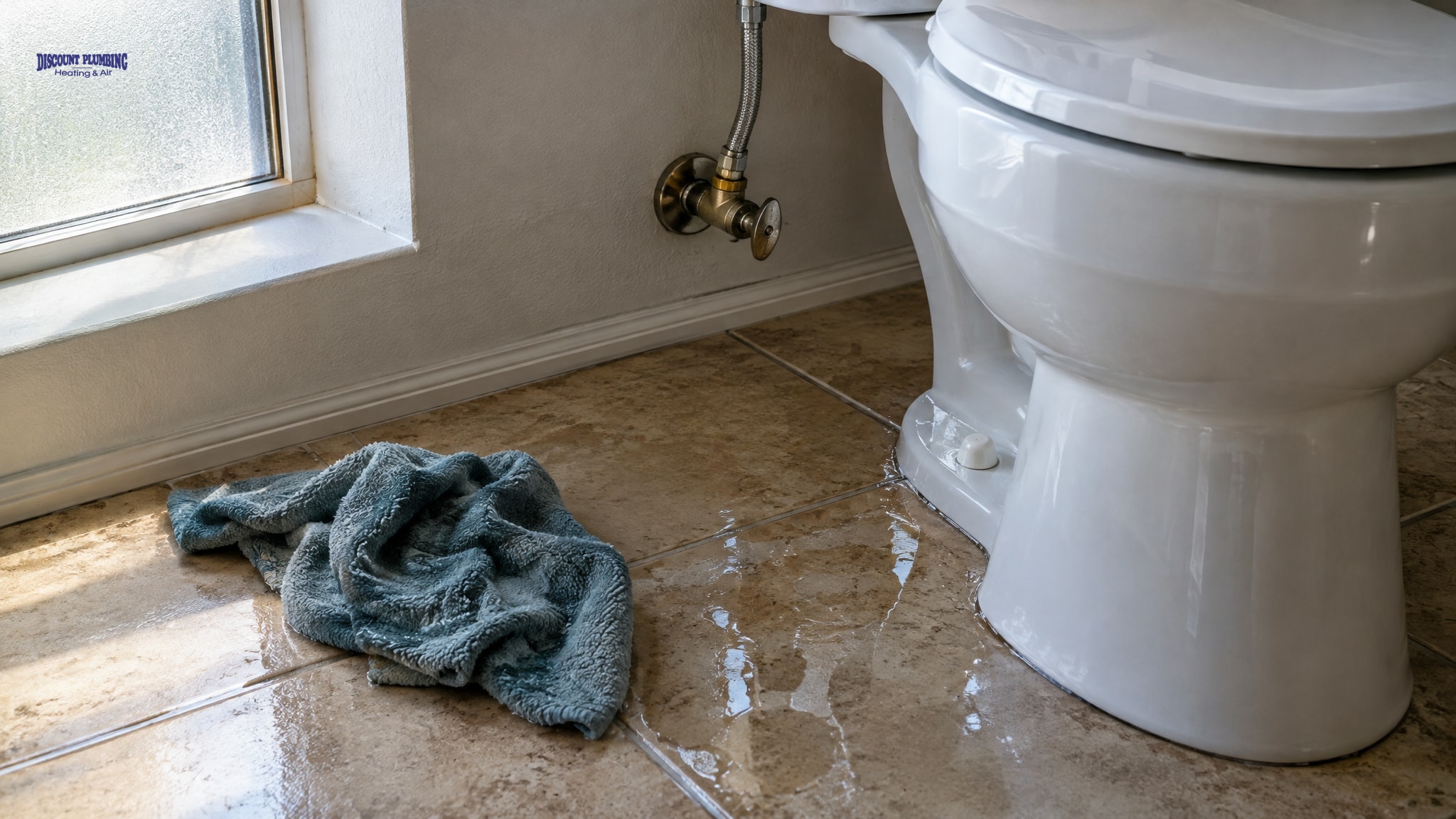
Shut off the water first. Most sinks and toilets have a small shutoff valve right at the fixture, and turning it clockwise is often enough. If you can't find the leak or the valve won't turn, close the main shutoff at the house.
Next, think about electricity. If water has reached outlets, appliances or the lower part of your electrical panel, cut power at the panel, but only if you can reach it without stepping through water. If the panel is wet or the floor around it is flooded, stay out and tell the dispatcher.
Photograph everything before you move anything. Wide shots of each room, close-ups of the wettest spots, and the damaged items where they sit will matter later for any claim.
Emergency water removal begins with stopping the source and then pulling out standing water, because every hour that water sits, it moves into drywall, baseboards and subfloor. If you want the full picture of how that response works across the region, read about emergency water damage restoration in the West Valley.
Burst Pipe Cleanup in Buckeye Homes
A burst pipe is the most urgent version of this problem, because water keeps coming until someone closes a valve. Once the water is off, keep out of any room where the ceiling is sagging or bulging, since saturated drywall can drop without warning.
Lift small items, rugs and electronics out of the wet area if it is safe, and leave the heavy cleanup to a crew with extraction equipment. A household mop or shop vacuum won't reach the water that has already soaked into walls and flooring.
Our guide on what to do when a pipe bursts lays out the pre-call steps in more detail.
What to Have Ready When You Call for Help
A dispatcher can send the right people and equipment faster when you can answer a few questions. Gather these while you wait for the call to connect:
- The street address, plus any gate code or community access instructions
- Where the water started and whether you have shut it off
- Whether power is off at the panel
- Which rooms and floors are wet, and roughly how much standing water you see
- Your insurance carrier and policy number, if you have them handy
- Your builder's warranty paperwork, if the home is new
We won't promise an exact arrival time over the phone, because it depends on where the crew is and how far the drive is. What we can do is tell you what to do while help is on the way.
Why New Buckeye Homes Leak: Builder-Installed Plumbing, Slabs, and Supply Lines
New construction has a reputation for being trouble-free, and most of it is. But fast-growing areas like Buckeye have a lot of homes built quickly, and an installation problem in a fitting, a supply line or a pipe run under the slab can surface within the first few years.
That doesn't mean your new home has a defect. It means that if water shows up where it shouldn't, a recent build date is not a reason to rule out the plumbing.
Builder-Defect Leaks in New Construction
The usual culprits are small: a fitting that wasn't seated fully, a supply line that was kinked or stressed during installation, or a connection that held through inspection and let go under months of pressure cycling.
These leaks often start slowly. You may see nothing for weeks while water works into the wall cavity or the subfloor.
Before any repair begins, pull out your closing paperwork and read your builder's warranty terms. They may spell out who must be notified and when, and a repair done first can complicate a warranty claim. Document the damage with photos and notes, then contact the builder or your insurer as the terms direct. Stopping the water and starting the dry-out is a separate matter, and delaying it only increases the damage.
Slab Leaks and Failing Supply Lines
Most Buckeye homes sit on concrete slabs, so some water lines run beneath the floor where you can't see them. A leak there often reveals itself through indirect signs instead of a puddle.
A typical case looks like this: a homeowner finds a warm patch on the tile, a soft baseboard, or a water bill that climbs without explanation. In a slab-built home, those signs can point to a supply or slab leak hidden from view, and it has to be located before drying can start. Drying a floor while the pipe underneath is still leaking only buys time.
If you notice any of those signs, shut off the water at the main and check whether your meter keeps moving. Our list of signs of hidden water damage in walls and floors can help you spot more clues before you call.
Service Coverage for Water Damage Repair in Buckeye, Arizona
Skinner & Son is based in Avondale and serves Buckeye as part of the wider West Valley. We are not around the corner from every address in the city, and we'd rather say so plainly than let you assume otherwise.
The same crew works neighboring cities, which is why we know the area, and you can read about our water damage restoration in Avondale to see how the work runs closer to our home base.
How Drive Distance Affects Response Time
Buckeye covers a large footprint, and master-planned communities such as Verrado and Sundance sit far apart from each other. Drive time to your door depends on where you are in the city and what time of day it is.
A longer drive does not have to mean unmanaged damage. When you call, ask how the crew dispatches and what you should do while you wait, because a good dispatcher can walk you through shutting off water, protecting belongings and photographing damage before anyone arrives.
You should also ask that question of any company you call. The answer tells you how they work, and a clear one is a good sign.
The Drying Process: Extraction, Moisture Mapping, and Monitoring
Water you can see is only part of the problem. The rest is in the drywall, under the flooring and inside wall cavities, and professional drying is built to find it and remove it in a set order.
- Extraction. Pumps and extractors remove standing water and as much surface water as possible from carpet, pad and hard floors.
- Moisture mapping. Meters find wet materials behind walls and under flooring, and the crew marks where the moisture reaches.
- Air movers and dehumidifiers. Equipment is placed to move air across wet surfaces and pull the moisture out of the room.
- Repeated readings. The crew returns, takes fresh readings and adjusts equipment until materials reach a dry standard.
Drying that runs on documented readings is different from drying that stops when a surface feels dry to the touch. The IICRC water damage restoration standard treats drying as a measured process that ends when materials reach a dry standard, not when they look fine.
Equipment and Repeated Readings Until Materials Are Dry
Hidden cavities are what slow drying down. Wet insulation, the space behind cabinets and the area under a floating floor hold moisture long after the room feels normal, so the crew keeps taking readings until the numbers say the job is finished.
Moisture left behind invites mold, and that is the outcome the repeated readings are meant to prevent. If you spot musty smells or discoloration after a dry-out, read our guide to mold after water damage removal for what to do next.
Drying does not repair the leak, and it will not replace materials that are too damaged to save. That part comes after.
Flood Cleanup in Buckeye, AZ After Monsoon Storms
Monsoon season can bring heavy rain, storm runoff and water pushed toward a home from outside. Flood cleanup in Buckeye, AZ is a different job from a clean supply-line leak, because floodwater can carry dirt, bacteria and other contaminants into your house.
That changes how the crew handles it. Materials that touched floodwater, especially porous ones like carpet, pad and drywall, often have to be removed instead of dried in place, and protective gear and more careful disposal come with the job.
The scope depends on what was flooded. A garage or porch is a different job than a living area with carpet and baseboards, and a crew needs to see the space before it can tell you what comes out and what stays.
If water is coming in from outside, keep your family and pets out of it until it has been assessed. Call us once you are safe, and send photos if you can.
From Water Damage Restoration to Reconstruction in Buckeye
Drying is not the end of the project. When the readings are good, the question becomes what the water took with it and what has to be rebuilt.
The advantage of a single contractor is that the crew who dried your home already knows where the water went, what was removed and what the moisture readings looked like. Skinner & Son also remodels kitchens and bathrooms, so the same contractor can carry a room from dry-out through rebuild and finish work. If you are weighing it, here is why a restoration company that also handles remodeling simplifies things.
Water Damage Reconstruction: What Gets Removed and What Gets Rebuilt
Water damage reconstruction in Buckeye starts with tearing out what can't be saved. That usually means:
- Wet drywall and insulation
- Flooring that has swollen, warped or soaked through
- Cabinet bases and baseboards that absorbed water
Once those materials are out, the crew confirms dry readings and checks for mold before anything is closed back in. Closing walls over damp framing is how a small leak turns into a second repair.
Then the rebuild follows: new insulation and drywall, flooring, cabinets, trim, texture and paint. If the damage hit a kitchen or bathroom, this is also the point where many homeowners choose to update the room instead of putting it back exactly as it was.
Documentation and Insurance Before the Rebuild Starts
Photos taken before items are moved, a dated moisture log and an itemized scope give an insurer concrete records to review. A restoration contractor should be producing them as the work happens, so you aren't piecing them together at the end.
Your policy decides what is covered, and a contractor cannot promise a claim outcome. It helps to read up on whether insurance covers water damage restoration before you start the rebuild.
How to Choose a Water Damage Company in Buckeye
You are letting a crew into your home on a bad day, so it pays to check a few things before you agree to anything. Our longer piece on what to look for in a water damage restoration company goes deeper, but these are the essentials.
Local Crew, Written Scope, and Clear Records
- Local crew familiarity. Ask whether the company knows Buckeye's newer neighborhoods, slab construction and long drive times.
- A verifiable state contractor license. Look up the license with the Arizona Registrar of Contractors instead of taking someone's word for it.
- A written scope with moisture logs. You should be able to see what is being done and what the readings are.
- The ability to carry the job through rebuild. A company that dries and then hands you off leaves you to coordinate the repair yourself.
If you find water in your home right now, shut off the source and call us. We'll walk you through the next steps while the crew gets on the way.
If your home is already dry or drying, request a reconstruction consultation with Skinner & Son and we'll talk through what comes out, what goes back and how the rebuild fits together.
Frequently asked questions
Does Skinner & Son serve Buckeye if you're based in Avondale?
Yes. We are based in Avondale and serve Buckeye across the West Valley. Drive time varies depending on where in Buckeye you live, so ask how the crew dispatches when you call and what to do while you wait.
Should I call my builder or my insurance company first after a leak?
Shut off the water and photograph the damage first, then call whoever your paperwork says to notify. For a new home, check your builder's warranty terms and closing documents. Do not delay dry-out while you wait, because the damage grows the longer materials stay wet.
How long does it take to dry out a house after water damage?
There is no fixed number of days. Drying ends when repeated moisture readings show the materials have reached a dry standard, and hidden cavities behind walls or under flooring can make that take longer.
How can I tell if I have a slab leak?
Common signs are a warm spot on the floor, damp flooring or soft baseboards, and a water bill that climbs with no explanation. Shut off the water at the main and check whether your meter keeps moving. If it does, call so the leak can be located before drying starts.
Can the same company dry out my home and rebuild it?
Yes. Skinner & Son handles restoration, reconstruction and kitchen or bathroom remodels as one contractor. The crew that did the dry-out already has the moisture records and knows what was removed, which keeps the rebuild moving.